The Artisan
KRIOBAM • 28 June 2018
THE WORLD IS MESSED UP!
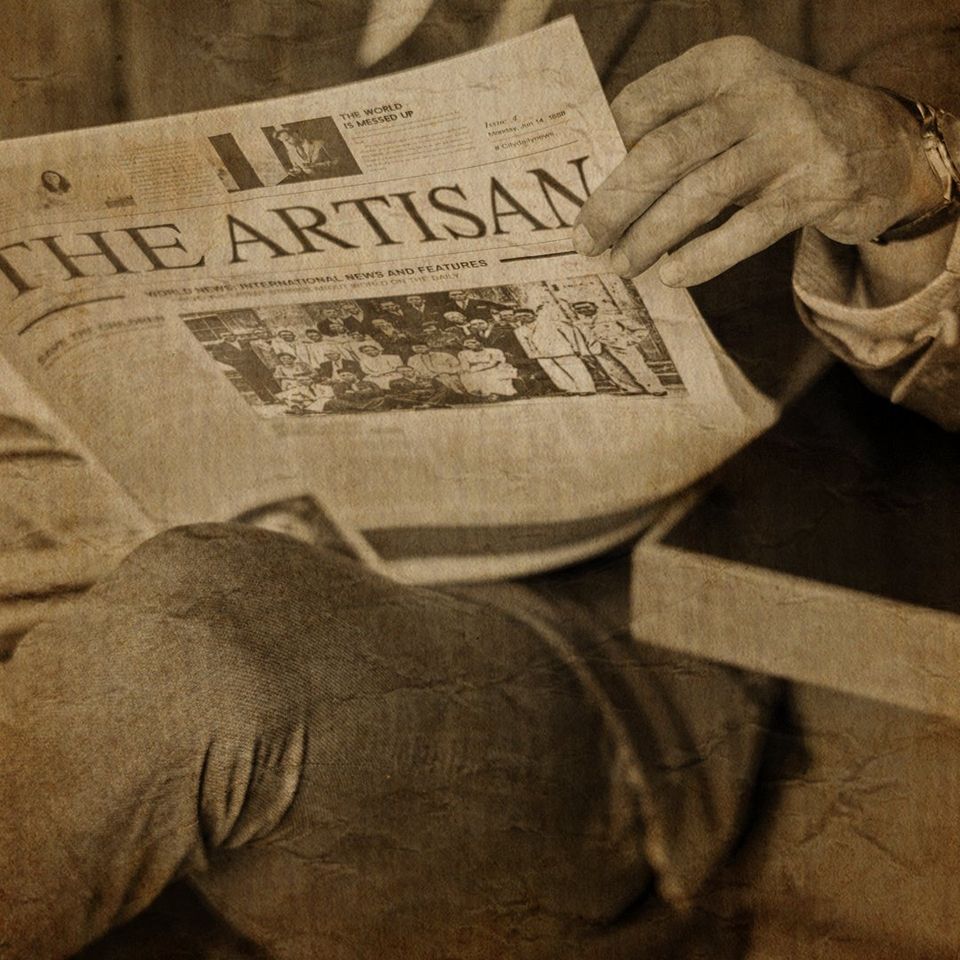
Artisans in Freetown were descendants of repatriated slaves during the eighteenth and nineteenth centuries; its society one in which western cultural symbols and notions of equality, liberty, the rights of man and a Christian sense of justice pre-dominated.
Artisan society employed what they knew best, their cultural heritage, in protecting their interests. And like artisans elsewhere, they interpreted these notions from the point of view of their class interests.
Most artisans worked for government and individual contractors, particularly those in the building trade such as masons, carpenters and painters. Others, notably shoemakers, blacksmiths and tailors, operated independently, though in certain instances they accepted subcontracting. Whereas some master artisans in the building and construction industries employed more labour, the majority relied on the labour of their apprentices.
The establishment of The Artisan in 1884 as a journal committed 'to advance' the cause of a 'class hitherto much neglected and downtrodden' of class relations in late nineteenth-century Freetown. For the first time in the settlement, a journal was born which explicitly proclaimed its goals on behalf of a class. It criticised state officials for attributing the fall in wages to the depression; condemned the alliance between the state and the mercantile firms; and called for a genuine representation of the people.
Several artisans such as goldsmiths, tailors, shoemakers, cabinet-makers, undertakers and carpenters, were ranked among the elite of Sierra Leone during the late nineteenth and early twentieth centuries; Thus, families who could not afford to educate their children in Britain, could apprentice them to a local artisan who would prepare them for a local occupation, which was economically beneficial and furthermore was in some cases deemed to be equally prestigious.
Summarised from:
Rethinking African labour and working‐class history: The artisan origins of the Sierra Leonean working class by Ibrahim Abdullah
Rethinking African labour and working‐class history: The artisan origins of the Sierra Leonean working class by Ibrahim Abdullah
The Journal of Sierra Leone Studies Edited by John Birchall